






A beautifully painted or stained deck can completely transform your outdoor space, but the secret to a long-lasting, professional finish is proper preparation. Many homeowners make the mistake of skipping prep work, leading to peeling paint, uneven staining, and premature wear. In Chicago, where decks face sun, rain, snow, and humidity, preparing your deck properly is essential for both aesthetics and durability.
This guide walks you through every step of deck preparation before painting or staining.
Why Deck Prep Is Crucial
- Longevity: Proper prep prevents cracking, warping, and water damage.
- Smooth Finish: Ensures paint or stain adheres evenly without blotches or streaks.
- Protection: Prepares the wood to resist moisture, UV rays, and temperature changes.
- Cost-Effective: Prevents frequent touch-ups or early repainting.
Chicagoland Paint Pro Tip: The time spent on prep is often more important than the actual painting—it’s what ensures a long-lasting finish.
Step 1: Inspect Your Deck
- Look for damaged or rotting boards. Replace any that are unsafe or severely weathered.
- Check for loose nails or screws and tighten them.
- Identify splinters, cracks, or gaps that need filling.
Pro Tip: A structurally sound deck is the foundation for a flawless finish.
Step 2: Clean the Deck Thoroughly
- Sweep away dirt, leaves, and debris.
- Use a deck cleaner or mild detergent to remove mildew, algae, and grime.
- For stubborn stains, a pressure washer can be used, but keep pressure moderate to avoid damaging the wood.
- Allow the deck to dry completely—painting or staining wet wood leads to peeling and poor adhesion.
Step 3: Sand the Deck Surface
- Sand rough spots, old paint edges, and splintered areas with medium-grit sandpaper.
- Feather edges where old paint or stain remains to create a smooth transition.
- Sanding helps paint or stain adhere evenly and creates a professional finish.
Chicagoland Paint Pro Tip: Pay special attention to high-traffic areas—they often need extra smoothing.
Step 4: Repair and Fill
- Use exterior-grade wood filler for cracks, holes, and minor gaps.
- Replace severely damaged boards.
- Ensure all repairs are flush with the surface before painting or staining.
Step 5: Apply Primer or Wood Conditioner
- For painting: Use a high-quality exterior primer to improve adhesion and protection.
- For staining: Apply a wood conditioner to help absorb stain evenly, especially on softwoods like pine.
- Follow manufacturer instructions for drying times.
Step 6: Choose the Right Conditions for Painting or Staining
- Work in mild, dry weather—avoid direct sun, high humidity, or rain.
- Avoid very hot or freezing temperatures, which can affect curing and adhesion.
- Cover nearby plants and furniture with drop cloths or plastic sheeting.
Step 7: Tools and Techniques for a Smooth Finish
- Brushes: Perfect for corners, railings, and intricate areas.
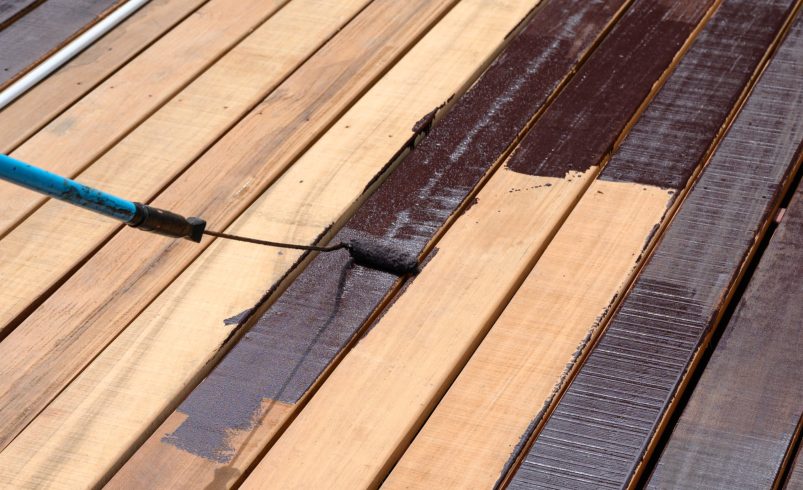
- Rollers: Efficient for large deck surfaces.
- Sprayers: Provide smooth, even coverage for modern decks.
- Apply 2–3 thin coats instead of one thick coat to prevent drips and ensure durability.
Pro Tip: Always work with the grain of the wood for a natural, professional finish.
Maintenance After Painting or Staining
- Inspect your deck annually for peeling, fading, or damage.
- Clean gently with mild detergent to remove dirt, mildew, or pollen.
- Touch up scratches or high-traffic areas to maintain a uniform appearance.
- Reapply stain or paint every 3–7 years depending on product type and exposure.
Common Mistakes to Avoid
- Skipping cleaning or sanding
- Painting or staining wet or dirty surfaces
- Ignoring structural repairs
- Applying thick coats rather than thin, even layers
- Painting in extreme weather conditions
Final Thoughts
Proper deck preparation is the foundation for a durable, long-lasting paint or stain finish. By inspecting, cleaning, sanding, repairing, and priming or conditioning your deck, Chicago homeowners can achieve professional results that enhance both beauty and functionality.
A well-prepped deck not only looks stunning but also withstands harsh weather, making your outdoor space safe, comfortable, and enjoyable for years to come.