



Schools are high-traffic environments that require paints that are not only visually appealing but also durable, safe, and easy to maintain. From classrooms to hallways, cafeterias to gyms, choosing the right paint ensures a healthy and long-lasting environment for students and staff.
This guide outlines the best paint options for schools, focusing on durability, safety, and functionality.
1. Why Paint Safety Matters in Schools
- Low-VOC and Zero-VOC Paints: Minimize harmful fumes and improve indoor air quality.
- Non-Toxic Formulas: Essential for classrooms, libraries, and play areas where students spend long periods.
- Allergen-Friendly Options: Reduce airborne irritants that can trigger asthma or allergies.
Choosing safe paints is crucial for protecting children, teachers, and maintenance staff from long-term health risks.
2. Durability Requirements
Schools face constant wear and tear, including:
- Frequent contact with furniture, backpacks, and equipment
- Abrasions and scuffs from students and staff
- Cleaning with mild detergents or disinfectants
- Accidental spills in cafeterias, labs, or art rooms
Durable paints reduce maintenance costs and keep school walls looking professional over time.
3. Recommended Paint Types
1. High-Quality Latex Paint
- Washable and easy to clean
- Flexible and resistant to minor impacts
- Works well for classrooms, libraries, and administrative offices
2. Semi-Gloss or Satin Finishes
- Ideal for corridors, cafeterias, and gyms
- Resistant to frequent cleaning and scrubbing
- Slight sheen reflects light, brightening interiors
3. Antimicrobial Paints
- Protects surfaces in classrooms, labs, and high-touch areas
- Reduces bacterial growth and supports healthy learning environments
- Particularly useful in restrooms, cafeterias, and nurse’s offices
4. Epoxy-Based Coatings
- Extremely durable and abrasion-resistant
- Perfect for gym floors, laboratories, or utility rooms
- Long-lasting solution for heavy-use areas
4. Color Considerations for Schools
- Classrooms: Soft blues, greens, and neutrals support focus and reduce stress
- Hallways: Light neutrals improve brightness and wayfinding
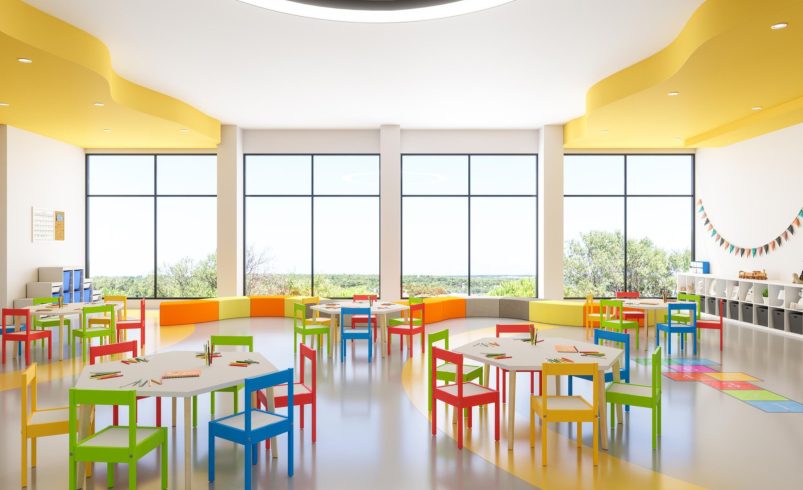
- Cafeterias and Gyms: Bright, energetic colors stimulate activity and engagement
- Libraries and Study Spaces: Muted tones create calm, focused environments
Pro Tip: Use accent walls or small pops of vibrant colors strategically to energize spaces without overstimulation.
5. Surface Preparation for Longevity
Proper preparation ensures paint performs well over time:
- Clean Walls Thoroughly: Remove dirt, grease, and old paint residue.
- Repair Damage: Patch cracks, holes, and surface imperfections.
- Prime Surfaces: Essential for adhesion and a smooth, professional finish.
- Apply Multiple Coats: Thin, even coats enhance durability and coverage.
6. Maintenance and Longevity Tips
- Regular Cleaning: Wipe down walls to remove dirt and prevent stains.
- Spot Touch-Ups: Keep leftover paint for quick fixes in high-traffic areas.
- Periodic Repainting: High-traffic zones may require repainting every 3–5 years.
- Protective Measures: Consider chair rails or corner guards in areas prone to bumps.
7. Common Mistakes to Avoid
- Using standard residential paints that cannot withstand heavy use
- Ignoring safety factors like VOC levels and toxicity
- Choosing overly bright or dark colors that highlight scuffs
- Skipping proper surface preparation before painting
- Neglecting maintenance plans for high-traffic areas
8. Final Thoughts
Durable and safe paints are essential for educational facilities. By selecting low-VOC, antimicrobial, and high-quality finishes, schools can protect students and staff while maintaining professional, attractive interiors.
A strategic painting approach balances aesthetics, functionality, and safety—creating spaces that support learning, collaboration, and overall well-being.