





Painting the exterior of your home is one of the most impactful ways to boost curb appeal, protect surfaces, and increase property value. While hiring a professional is always an option, DIYers can achieve professional-quality results with proper planning, tools, and techniques. This guide will show you how to paint your house exterior like a pro, ensuring a durable, flawless finish that enhances your home’s appearance for years.
1. Plan Your Project Like a Pro
Professional painters don’t just grab a brush—they plan carefully:
- Assess the Surfaces: Inspect siding, trim, doors, and windows for damage, peeling paint, or mold.
- Calculate Paint Needed: Measure wall area and use paint coverage estimates to purchase the right amount.
- Schedule Around Weather: Choose dry, mild days for painting. Avoid painting in extreme heat, humidity, or rainy conditions.
- Set Up Work Zones: Protect landscaping, patios, and windows with drop cloths or plastic sheeting.
2. Select High-Quality Paint and Primer
The right paint ensures longevity and professional results:
- Paint: Acrylic latex paints are ideal for exteriors—durable, flexible, and resistant to cracking.
- Primer: Priming raw wood, patched areas, or strong color changes improves adhesion and hides stains.
- Finish:
- Satin/Eggshell: Durable, cleanable, and low sheen for siding.
- Semi-Gloss/Gloss: Perfect for trim, doors, and shutters for a polished look.
3. Prepare Your Surfaces Thoroughly
Professionals spend significant time preparing surfaces:
- Clean Thoroughly: Use a pressure washer or scrub with mild detergent to remove dirt, mildew, and loose paint.
- Repair Damage: Fill cracks, holes, and replace any rotted wood. Sand rough spots smooth.
- Caulking: Seal gaps around windows, doors, and trim to prevent water intrusion.
- Masking: Use painter’s tape to protect non-painted areas like windows, door frames, and hardware.
4. Master Professional Painting Techniques
Proper technique is what separates DIY from professional results:
- Cutting In: Use an angled brush to paint edges and corners before rolling or spraying large areas.
- Rolling:
- Apply paint in sections, maintaining a wet edge to avoid lap marks.
- Use a thick-nap roller for textured surfaces and smooth even coats.
- Spraying (Optional): Professionals often use sprayers for large surfaces; back-roll to ensure even coverage.
- Thin, Multiple Coats: Avoid heavy coats. Multiple thin layers give better coverage and prevent peeling.
5. Timing and Environmental Awareness
Professional painters consider how the environment affects paint:
- Temperature: 50–85°F (10–29°C) is ideal. Avoid extreme heat or cold.
- Humidity: High humidity slows drying and can cause bubbles.
- Sun Exposure: Avoid painting walls in direct sun to prevent streaking or blistering.
6. Safety Like a Professional
Exterior painting can be risky if proper precautions aren’t taken:
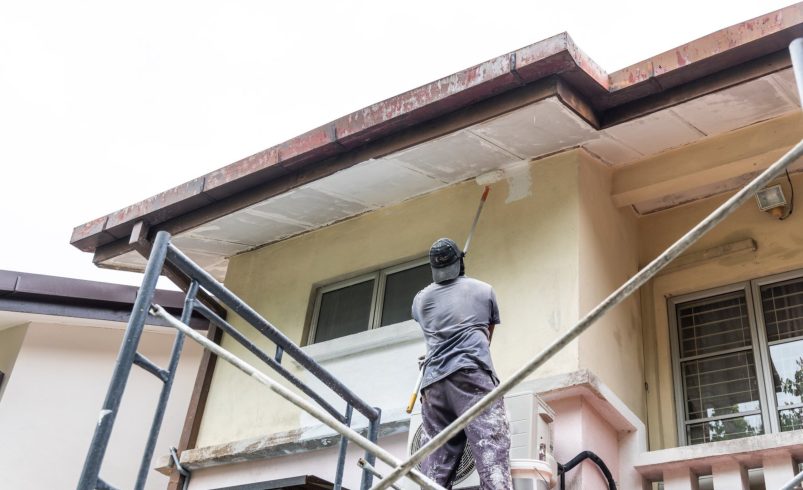
- Ladders and Scaffolding: Ensure stability, maintain three points of contact, and avoid overreaching.
- Protective Gear: Gloves, eye protection, and masks reduce exposure to chemicals and paint.
- Work with a Buddy: Having someone assist improves safety and efficiency, especially on multi-story homes.
7. Finishing Touches for a Professional Look
Small details make a big difference:
- Inspect and Touch Up: After drying, check for streaks, missed spots, or uneven coverage. Touch up as needed.
- Remove Tape Carefully: Avoid peeling paint by waiting until the paint is dry, then slowly pull tape at an angle.
- Clean Tools Properly: Wash brushes, rollers, and trays to maintain them for future projects.
- Maintenance: Professionals recommend annual inspection and touch-ups to keep paint looking fresh.
8. Tips from Professionals
- Work from top to bottom to catch drips before they dry.
- Use high-quality brushes for trim to reduce streaking.
- Blend each new section into the previous wet edge to avoid lap marks.
- Test paint colors on a small section in different light conditions before painting the entire house.
- Consider using paint conditioners for latex paint to improve flow and leveling.
Conclusion
Painting your house exterior like a pro is achievable with preparation, the right tools, and proper techniques. By planning ahead, selecting high-quality paint, preparing surfaces meticulously, and applying paint carefully, DIYers can achieve a long-lasting, flawless finish that enhances curb appeal and protects their home. With patience and attention to detail, your exterior paint project can rival professional results and leave your house looking refreshed and beautiful.