





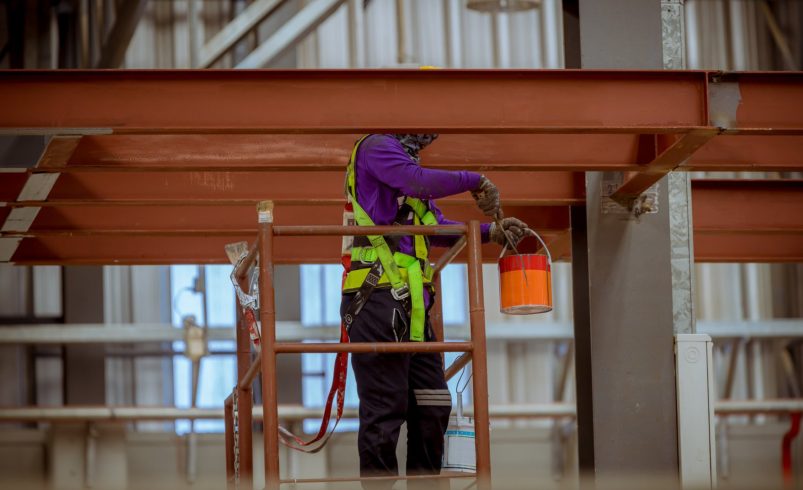

Warehouses are high-traffic, heavy-use spaces that require paint solutions designed for both safety and long-term durability. Proper warehouse painting goes beyond aesthetics—it protects surfaces, improves visibility, and contributes to a safer, more efficient working environment.
This guide provides essential tips for painting warehouses effectively and professionally.
1. Prioritize Safety With Color Choices
- High-Visibility Colors: Bright yellows, oranges, and reds are ideal for marking hazards, walkways, and machinery zones.
- Contrast for Clarity: Use contrasting colors to highlight stairs, edges, and loading areas.
- Consistent Markings: Clearly define pathways, storage areas, and safety zones to prevent accidents.
Chicagoland Paint Pro Tip: Safety-oriented color schemes reduce workplace accidents and improve operational efficiency.
2. Choose Durable Paints for Heavy Use
- Industrial-Grade Paints: Designed to withstand wear from forklifts, pallets, and heavy foot traffic.
- Epoxy Coatings: Provide a hard, chemical-resistant finish suitable for floors and high-use surfaces.
- Semi-Gloss or Gloss Finishes: Easy to clean and more resistant to abrasion than flat finishes.
3. Prepare Surfaces Properly
- Clean Thoroughly: Remove dust, oil, and grease to ensure proper paint adhesion.
- Repair Damage: Patch cracks, chips, or uneven concrete to prevent premature paint failure.
- Priming: Apply a primer suited for metal, concrete, or masonry surfaces for long-lasting results.
4. Optimize Lighting and Visibility
- Bright Walls: Lighter wall colors reflect light, improving visibility in poorly lit areas.
- Marking Safety Zones: Use bold colors to designate high-risk or restricted areas.
- Signage Coordination: Ensure painted markings work with warning signs for clear communication.
5. Focus on High-Traffic Areas
- Entryways and Loading Docks: Reinforce with durable, impact-resistant paints.
- Forklift Paths: Use floor markings to guide operators and reduce collisions.
- Storage Areas: Color-coded zones improve organization and workflow efficiency.
6. Consider Maintenance and Longevity
- Easy-to-Clean Finishes: Smooth surfaces allow for quick cleaning of spills and dirt.
- Touch-Up Ready: Keep leftover paint for maintenance and spot repairs to extend longevity.
- Moisture Resistance: Ensure coatings withstand humidity, water exposure, or chemical spills.
7. Common Mistakes to Avoid
- Skipping prep work, leading to peeling or flaking paint
- Choosing low-quality paints not designed for industrial use
- Ignoring safety markings and color coding
- Failing to consider lighting and visibility in color selection
- Overlooking maintenance and cleaning requirements
8. Final Thoughts
Warehouse painting is a strategic investment in safety, efficiency, and durability. By selecting the right paints, preparing surfaces properly, and using color for both organization and safety, warehouse operators can create a professional, functional environment that protects employees and assets.
Durable, well-planned paint applications reduce maintenance costs, improve operational workflow, and ensure a safer workplace—making it essential for any industrial facility.